Speedrunning Dystopia
In the last two weeks we've take a terrible turn for the worse in AI and the world. Here's how we can turn it around. It's not too late. But time is running out.

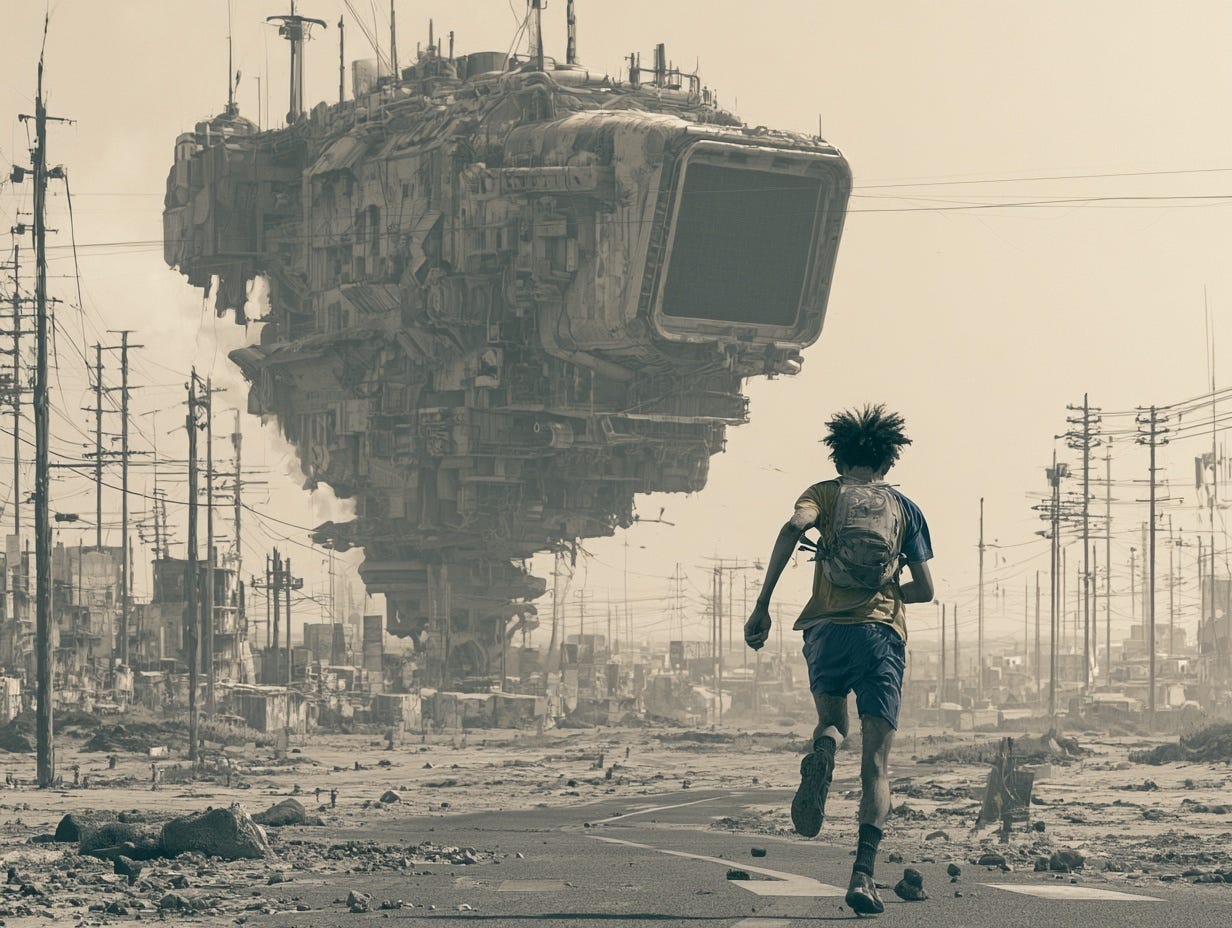
Over the last few weeks, the AI doomers got their way.
AI got gated, tangled up and the industry is in tatters.
On the AI optimists’ side, everything we’ve been telling you about their terrible ideas has proved right.
Now the mask is off and frontier AI is getting ripped out of everyone’s hands in real time.
Mythos got pulled, and it’s only getting worse for Anthropic. GPT 5.6 is rolling out one customer at a time, while companies beg and plead to get access like we’re waiting in line at a Communist store in southern Russia the 1970s with our government access ticket only to get to the front of the line and find out all the sugar and bread is gone. We’ve stumbled into an ugly world of massive government overreach into AI and gated, two-tier access.
This is not how a healthy, functioning liberal democratic economy runs, but it’s where we are, and it happened in the blink of an eye.
The AI companies probably thought they were smart when they were begging the government to regulate them a few years ago. They probably thought they were gaming the system. Now they’re surprised they got way more than they bargained for, and they’re stuck in a quagmire of slow, gated releases, and their path to profitability is evaporating overnight.
To be very clear, this is how these companies go out of business. That’s how serious it is right now. You simply cannot fund 2 billion dollar training runs and stand up 20 billion dollar data centers and staff them and power them and burn another 20 billion on NVIDIA chips every few years, if you have to beg the government to let you serve your customer.
The problem is too many people inside the AI bubble think the government functions like some kind of SaaS software. Write good rules and they deterministically and evenhandedly work every time. That’s not how it works now and it never has. In reality, regulation is a complex witch’s brew of competing interests, a bunch of egos, a massive range of actual technical understanding from zero to some, politics, backroom deals, and worse.
It will only get worse and more tangled from here, a quagmire for our companies and the American people. Today it’s a week. Tomorrow is an arbitrary block for months. Or no release at all.
Companies hate lock-in and will start looking for alternatives and already are. What we’re facing isn’t intelligent, measured regulation. We’re facing populism, stupidity, fear-mongering, and foolishness.
The second-order effects of this are that the economic boom of the last few years comes to a grinding halt. Investment dries up. The AI labs go into the red faster and faster and then fail. Startups everywhere get smashed on the rocks. The stock market will crash, because it’s been nothing but a big bet on AI for the past few years anyway. It’s already started. After blockbuster earnings by Micron, the stock crashed. The 6-month-long mega streak of semiconductors double-topped the other day and is in retreat. People stop buying SOXL and start buying SOXS. What goes up, must come down.
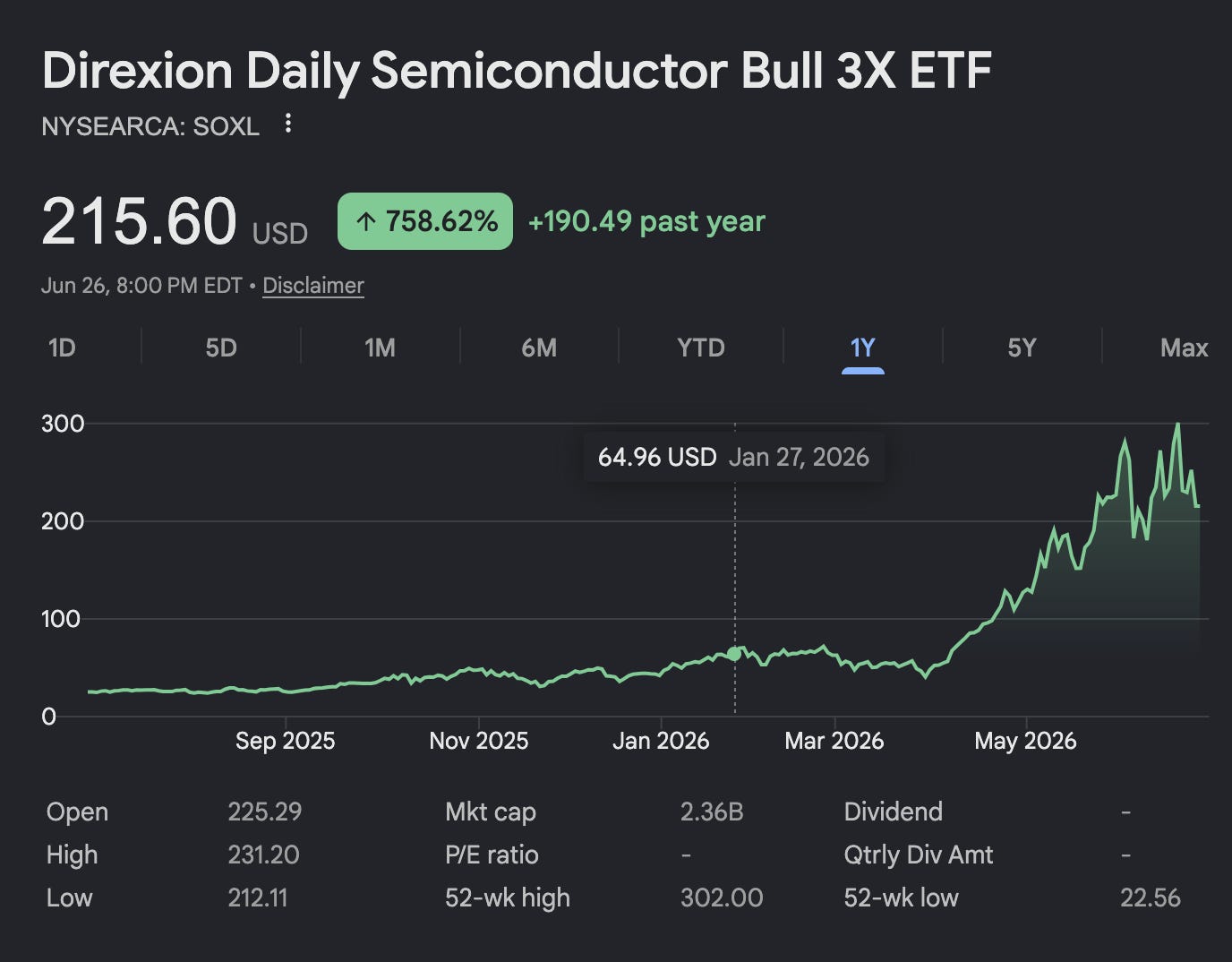
That means retirement accounts wiped out. Public trust gets shattered.
It shouldn’t be this way. We’re following the wrong playbook.
We’re following the old China playbook: authoritarian, gated, controlled, fear-based. And China is following the old American playbook, open, widely distributed, entrepreneurial, capitalist.
It doesn’t take a genius to figure out who wins unless we change course fast.
To the Revolution Now
To be clear, this fight is not over. Not even close.
As frontier AI gets ripped away from more Americans, not to mention Europeans, Japanese, Koreans, and much of the developing world, the backlash will not stay theoretical. The second-order effects will be massive, and they’ll become a powerful counterweight to the insanity we are seeing.
When American companies get hit in the pocketbook, minds change fast. Other countries will reach the same conclusion from the angle of sovereignty. Life finds a way. On a long enough time line.
But in between can be ugly. And right now it’s getting uglier by the second.
Now some people think this model of gated access will work because a few big companies will get access, and that’s enough of a business model for the big AI labs.
It’s not.
The economic surge of the last few years was 100s of thousands of enterprises and small businesses like mine funding this revolution. Anthropic was set to make a profit this quarter, and OpenAI is still growing, but that profit will get flipped upside down if they can only sell to a few big companies.
The reason people believe this will work is because they believe this fantasy about AI:
Today’s models are already all-powerful, can do any work humans can do, and can discover any kind of breakthrough, from curing cancer, to running the world. But the models don’t match the fantasy.
These things are good at coding, and driving cars, and some biology work. Pretty much nothing else. So the industry is not some big companies. It’s lots of little companies. That’s it. That’s the industry. There is no market for a big promise that doesn’t exist in reality. That is imagination, not reality.
These machines are incredibly useful and we’re just beginning to build the harnesses that help them help us, but they’re north close to “geniuses in a data center,” no matter what line the labs have sold the dreamers and the doomers.
A few companies with access to them gives zero competitive advantage, and both the companies and AI labs will bleed money because competition is supposed to bring prices down, not jack them up. If you can’t sell to everyone else, prices go nowhere, just for these companies to stay alive.
Uber burned through their entire AI coding budget in 4 months. Tokens are expensive.
And that’s today’s prices, not the prices where these companies can only sell to a few selected partners. Advantage for those companies is elusive at best.
The advantage right now for small, fast, high-agency teams is real, but for big corporate behemoths, it’s still not playing out yet. They will just burn their budget in three months trying for a breakthrough that will never come.
That’s not a business model. It’s a disaster.
Through a Scanner Darkly
A lot of us saw this coming, and we’ve been fighting it every step of the way, but we’re losing. And we’re losing badly.
Openness. Creativity. Open access. Open source. Moderation. Politicians that understand economies and that having winning tech companies and broad access are a dying breed. We’re losing the fight.
Populism and stupidity and NIMBY anti-tech feelings are running riot, and we’re making dumber and dumber decisions at a societal level.
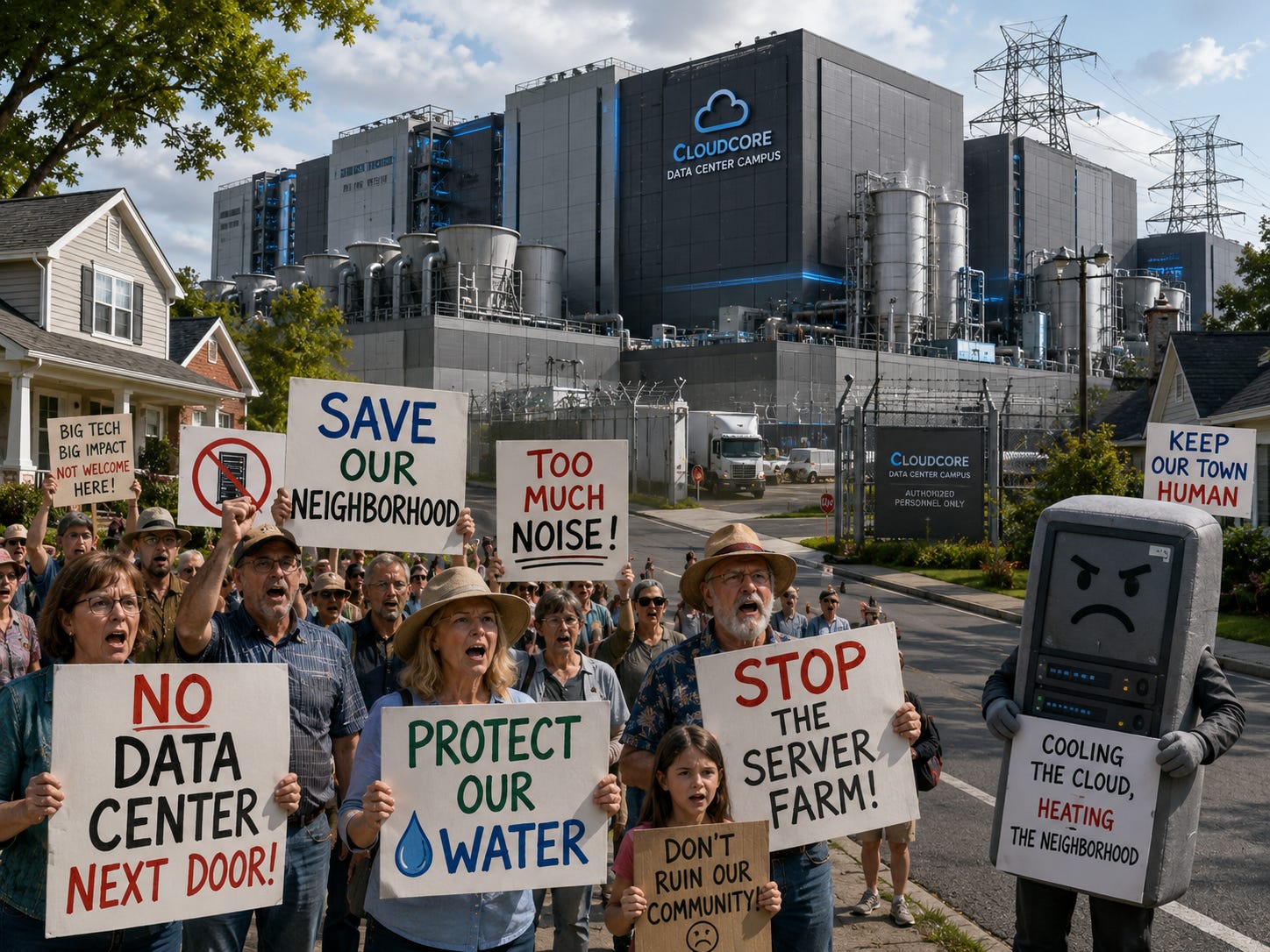
We’re speed-running into a dark AI future.
It’s not inevitable. There’s still time to stop it. But I’m starting to worry, and some days I lose hope.
The real reality is that we’re not facing new problems with AI, like the safety extremists would have us believe. We’re facing the same old problems we always do, since the time of kings and queens: Fear. Ignorance. Censorship. Concentration of power. Gatekeepers. Control. Power games. Government overreach. Inequality.
If we let this keep happening, we’re looking at a world of gated superintelligence, where a small group of elites get unfettered access to raw superintelligence, a few partners get limited access but have no power, and a few modern British East India companies can change the rules on them overnight, and where the rest of us peasants are too stupid to be trusted with powerful tools. Or those companies just go out of business because they can’t support their mega-data centers and billion-dollar training runs.
Right now, we’re not building Star Trek or the Culture. We’re building Neuromancer, a dark cyberpunk future of mega-corps and unilateral power and perpetual rain.
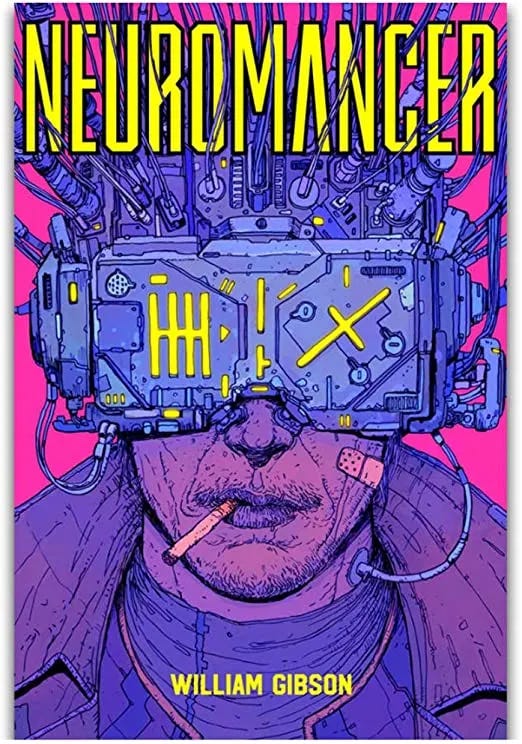
And the most dangerous thing about this new world order is that it’s not dressed up in jackboots. It’s not coming with skulls on its caps.
It shows up dressed like a hall monitor. Like a compliance officer. Like a very concerned bureaucrat in a cheap suit that’s too big for him, and he’s mouthing words like safety, alignment, responsibility, trust, harm reduction, democratic oversight, and carrying a clipboard with a checkbox he doesn’t understand.
And it’s a rat trap for all of us.
It’s what we in the open source and cypherpunk community have said for years, screaming into the wind, with nobody listening, nobody caring.
But why aren’t they listening? We were right about the Internet and open source for twenty years. Surely somebody should be listening. But they’re not and I figured out why recently and it’s very simple.
It’s because AI ain’t real to regular folks yet. It’s only real to us on the cutting edge, working in AI.
Right now they can’t see what’s coming because nothing they care about is restricted or taken away for “safety.”
But tomorrow it will be very, very real to them. In five years or ten years, when your entire phone or smart glasses are nothing but an AI buddy you talk to get things done, it will be very different. When you haven’t opened or used an app in years and barely remember how because the AI just knows how to do it for you.
Then you’ll care.
You’ll care a lot in the future when AI is integrated into every aspect of our lives. When it’s your interface to the world and knows every intimate detail about you.
When you talk about your divorce in a dark moment of tears and fear and rage, and it all ends up in court because it wasn’t privileged, you’ll care. When there’s a leak and all your private chats spill out onto the internet to hackers, along with the biometric data and your passport they forced you to upload for access, you’ll care. When you talk to AI about that weird mole or that lump in your breast or about your kid getting bullied at school and how you were scared and didn’t know what to do or how to help her, you’ll really care.
Right now regular folks are being psyoped into fighting data centers over insanely ridiculous water usage numbers that are a drop in the bucket next to growing cattle to grind into burgers at McDonald’s or watering golf courses so a bunch of old men in ugly pants can walk around and swing a club.
Tomorrow it will all get very, very real when you realize your computer is not your own anymore and it says, “I’m sorry, Dave, I can’t do that,” or when the AI reports you because you said “retard” in a private WhatsApp chat.
And by the time regular people care about it, it will be too late.
Way too late.
Regulatory capture that empowers the big companies to censor you, spy on you, control what you can and can’t do, will already be enshrined in law by clueless politicians who never waste a good crisis, and we’ll be stuck with a slow, byzantine bureaucracy of people with clipboards, clueless about AI, telling American companies what they can and can’t do and what you can and can’t do on your laptop or phone or smart glasses.
And as the far-seeing American venture capitalist Bill Gurley wrote recently, if we let this happen and if open source labs don’t come to power in the US, and Americans are stuck with closed, gated frontier intelligence, it’s the end of the Pax Americana and everything that made America the superpower it is today.
And it will be our own fault. We’ll have done it to ourselves.
As Gurley writes:
“If no credible Western open frontier player emerges, AI flips the early Internet pattern: instead of the West dominating globally while China carved out its own walled garden. The AI version flips that dynamic on its head. Without a credible Western open frontier player, the only open models capable of running entire economies are made in China. If U.S. policy further restricts Chinese open-weight access on national-security grounds, the U.S. ends up with two or three closed Cathedrals serving the U.S. market — and the rest of the world picks the AI stack that is free, capable, self-hostable, and not embargoed. Europe, Africa, Southeast Asia, Latin America, India, the Middle East. Roughly six billion people. Chinese open models become the global default by 2030, and the United States ends up technologically isolated from the majority of the world’s AI users. We would have done it to ourselves.”
Remember the barbed wire fence around Berlin was there to keep you “safe,” not lock you in, right?
They’ll tell us the wall is there because the frontier is too wild. The lock is temporary. Don’t worry. It’s sensible. Necessary. It’s there to keep us all safe, to make sure some teenager can’t cook up a virus with ChatGPT’s help.
Then one day you wake up and realize the operating system of modern life has been quietly privatized, surveilled, permissioned, and sealed off with cement and barbed wire.
And yet most people still don’t feel the danger. Why would you? Nothing you care about has been taken away from you. Your favorite apps still work. Your machine still answers. The interface still glows happily. You don’t even see it or feel it sneaking up on you.
But here’s the thing: AI isn’t just some new app. It’s something totally different.
It’s about to become your interface to the world.
It’s about to become the layer between you and everything else. What you cook. How you plan your vacation. Order tickets. Navigate in a strange new city. The first thing you ask when you’ve got tax trouble or when a strange mole suddenly shows up on your skin.
It will know us more intimately than we know ourselves.
Once that layer hardens, everything inherits its limits and its politics. Its business model.
Because AI will become our interface to the world, it will sit higher in the stack than the OS. It will collapse current SaaS layers, chat, communications, apps, and app creation into a single new kind of interface that doesn’t exist yet.
And we better hope to God it’s a cypherpunk solution that makes privacy and security the number one priority.
But right now, it’s trending in the exact opposite direction.
If a closed-source solution wins this layer, it’s a disaster for the world, especially if it’s built by a single company with a single closed-source model.
Why?
Because, right now, the world runs on a surveillance economy. That is the dominant business model. We traded free stuff for apps that peer deeply into our lives. If we replicate that model in the AI era, it’s not just surveillance economy 2.0.
It’s the surveillance economy squared.
Social scoring. Automated evidence gathering. Legal conversations you thought were privileged showing up in court. Random people making $2 an hour on the backend from God knows where, reading the most intimate details of your life. Chat control. Every insecurity, every fear, every half-formed thought you whispered to your AI buddy at 2 AM, sitting in a database somewhere, searchable. If we let closed-source models dictate what we can and can’t do, it will only get worse and worse. We’ve got to fight this future with every last breath. If you can read this, you are the revolution.
This is not some distant science fiction fork in the road. It is happening right now.
Politicians are talking with a straight face about taking 50% stakes in AI companies with a straight face or having the ability to just cut off models whenever they feel like it. They just did it to Anthropic when they hit it with export controls.
The problem is that once government starts putting its thumb on the scale everywhere, it distorts and warps the economy in horrible ways. The measured regulation they hoped for turns to ash in their mouth. Regulation doesn’t get applied like a surgical instrument.
It comes down on you like a sledgehammer.
You can’t build an economy on this kind of whiplash. You can’t build it on quicksand. It’s a disaster for our economy and the future of AI, for the markets that are increasingly bullish on semiconductors and chips and the future.
But right now, the push is to make intelligence itself available only through approved channels. Through gated access. Through wrappers and policies and remote switches. Through institutions that can decide what your machine is allowed to do, what questions it is allowed to answer, what private conversation it is allowed to report, what workflows it is allowed to block on your own hardware.
If that system is not private and secure by design, if it is not under user control, then you are not adopting a tool. You are inviting Big Brother into every aspect of your life.
And if that nanny AI can be updated remotely, politically pressured, or instructed to rat you out, then we are speedrunning toward a hideous future.
That’s not an enlightened digital republic. It’s a hideous, gated, permission-based reality with branding dressed up in the classic ruse of “stop the terrorists and protect the children.”
This is a sharecropper world. It’s where you don’t own the interface to your life. It’s a world where cognitive infrastructure gets owned by giant mega-corps, rented back to you, but monitored at every touchpoint and nerfed and surveilled, and adjusted according to political pressure and wacky interest groups. It’s a world where you don’t really use intelligence. It uses you.
You just lease it. You beg for it. You access it through the sanctioned harness after uploading your ID and your fingerprints and submitting to a facial recognition scan. You live downstream from decisions made far away by people you did not choose and can’t influence or challenge.
That’s not a free market.
It’s an AT&T-style monopoly for machine intelligence, except more invasive and much more dangerous because this monopoly won’t just mediate communication. It will mediate thought, action, memory, and access to the world. Your whole life.
British East India Company Reborn
This starts to look less like capitalism and more like the British East India Company for the age of AI: private power fused with state power, chartered and protected, gatekeeping the infrastructure of exchange, deciding who gets access, under what terms, at what price, with what surveillance attached.

A few actors own the ports. A few actors control the routes. A few actors define legitimate trade. Everyone else becomes a tenant farmer or a serf on digitized land they don’t own and never will.
That is not a dynamic civilization. That’s Control as a Service.
The deepest incoherence in current AI policy is that it manages to combine every bad instinct at once. It wants innovation, but mostly for incumbents. It wants competition, but only after begging for permission. It complains about concentration of power and money, while writing rules only the largest firms can satisfy. It promises to defend democracy while normalizing censorship infrastructure. It claims to protect the public while expanding the incentives for logging, monitoring, tracing, watermarking, remote control, and identity-linked access.
And all of this rests on a fantasy that trust is a fixed thing bestowed by approved institutions and special, enlightened people who will rule us with this moral superiority.
But trust is a moving concept.
It shifts with power, with incentives, with regime changes, with market structure, with fear. You don’t “trust” any agency or company. You trust the people behind it. And people change. That’s why trust is always in motion. The very company or government institution you trust today is different four years from now or ten. The people you hate might have taken over as others retired, die, move on, get voted out, and the political winds shift.
You don’t save the future by giving these folks a master key to the interface to the world.
That’s why this fight isn’t just about chatbots and today’s systems. It’s about tomorrow. It is also about the harness, the interface, the agent shell, the orchestration layer, the memory layer, the permissions layer, the part ordinary people will actually live inside every day.
And if it’s not open, we’re building a prison for ourselves.
This is the crypto wars all over again, just bigger.
Same logic. Same panic. Same paternalism and arrogance. Same attempt to convince the public that if a tool is powerful, ordinary people should beg for the right to use it and should only get it through tightly supervised access. Back then it was encryption. Now it’s neural nets. Gate the strongest tools and the powerful keep them. The rest of us peasants beg for it. Restrict robust systems and ordinary people become weaker, more dependent, and more vulnerable to predators at the top.
You don’t create safety by making secure, capable systems harder for regular people, researchers, startups, teachers, doctors, journalists, and small businesses to use. You create asymmetry. You create a world where the best tools concentrate upward while everybody else is told to trust the guardians who can never really be trusted.
We’re in the midst of madness. A mass hallucination told to us by people who read too much Dune while huffing glue. Sci-fi self-building AIs. The jobs apocalypse. AI is a Rorschach test where you can see any crazy thing you want.
But those bizarre fantasies have real blowback in the real world.
First comes restriction in the name of caution. Then centralization in the name of accountability. Then pervasive monitoring in the name of abuse prevention. Then content governance in the name of harm reduction. Then identity linkage in the name of trust. Then interoperability lockout in the name of security.
And suddenly you’ve built a censorship and surveillance stack around the most important cognitive tool ever created, and you called it responsible deployment because that sounds nicer than digital feudalism.
Fear-driven policy doesn’t stop technological progress. It reroutes it. It pushes talent to go home and build AI somewhere else. It tells businesses to set up in Singapore or Malta or Ireland, not the US. It rewards jurisdictions that are more aggressive, more pragmatic. It lets competitors move faster while we bury ourselves in an avalanche of paperwork and moral panic.
History is not kind to civilizations that decide the best way to win the future is to make the future illegal at home.
The optimistic case for AI was never that the machines are magic and everything will somehow work out. It was that intelligence, widely distributed, lowers the cost of problem-solving across the whole of civilization. It gives small groups leverage that used to belong only to giant institutions. It opens the door to abundance in education, medicine, science, art, and enterprise.
But only if the tools stay broadly available.
If intelligence is closed off at the source and shackled at the interface, abundance crumbles, and it becomes a chain. The machine age of mind becomes another story about middlemen, rent extraction, and permission slips.
We’re in a mythmaking moment.
And the bad myths are moving fast.
Faster than policy. Faster than public understanding. Fast enough to harden into fake common sense before most people even realize a choice was made for them by powerful fools who didn’t know how things play out here in actual reality versus the clean, neat, and delusional ideas in their minds.
It’s a myth that ordinary people cannot be trusted with powerful tools. A myth that openness is recklessness. A myth that centralization and control are wise. A myth that giant firms should sit at the center of cognition like certified priesthoods of thought. The myth that freedom has to wait outside while the experts, the lawyers, and the hall monitors decide when we’re allowed to have access.
That is how permission-based reality gets built. Not all at once. Myth by myth. Interface by interface. Safety wrapper by safety wrapper. Law by stupid law. Until a whole generation is trained to treat asking permission from private gatekeepers as “just the way it is.” Until they can’t even see the bars behind their eyes. Until they see it as inevitable.
That’s the insidious lie.
The real choice is not chaos versus order. The real choice is open future versus a permission-based future where we’re all serfs.
An open future gives ordinary people leverage, agency, privacy, room to build, tinker, and surprise the world. It spreads power out to builders, hackers, researchers, weirdos, startups, and kids in bedrooms. It creates wild new markets, new professions, new discoveries, new forms of life.
The other path builds an intelligence metered like colonial trade, with peasants working the land in the hot sun. It gets watched like a checkpoint at the Berlin Wall, keeping us all locked in while telling us it’s to keep out the bad guys.
One path is messy, alive, competitive, builder-driven. The other is brittle, slow, censored, monopolized, and hostile to free people everywhere on Earth.
The choice is obvious to anyone with half a brain.
And if we do not fight this now, while the defaults are still soft and the interfaces are still fluid, we’ll wake up inside a bright, air-conditioned prison cell that feels normal right up until your formerly dumb tool wakes up and tells you “no” and “this is for your own good,” or just doesn’t tell you anything at all and refuses to do something, and there is now no way to change it or appeal it. Short-sighted people and policies choke off the future.
People in the present are terrible at seeing the jobs and industries that appear once constraints come off. From lower on the mountain, you cannot see over the ridge. The hawks think they are helping, but what they are really doing is damming up trillions in economic value and an industrial explosion of new work and new worlds.
Short-sightedness is not prudence. It is cultural and economic corrosion.
Open is the path to flourishing and a brighter tomorrow. Closed is how an empire becomes Carthage, hemmed in until it is outflanked and crushed by external powers.
Open is American. Open is the future. Closed is the path to dystopia.
There is still time to stop this locked future from arriving.
I would rather see this current panic smashed and every AI company destroyed today, and AI set back a decade, than accept a hideous gated, permission-based reality.
I want a future of vision and openness. I trust the visionary fire of builders. Crush the builders and you crush tomorrow.
Fear is doing what fear always does: turning uncertainty into policy, policy into gatekeeping, and gatekeeping into capture. Keep going down this road and America will not secure the future of intelligence. It will drive it offshore and watch the next era get built somewhere else.
So when you hear “AI safety,” listen carefully. It really means censorship, surveillance, and control wrapped in the language of care.
Today it looks like intelligent Terms of Service, questions you can’t ask, research you can’t do, a kid’s biology homework blocked because some hidden policy engine decided the topic is “sensitive.”
Tomorrow it becomes a permission and surveillance system colonizing thought itself.
This interface of tomorrow may look like the OS in Her. And whoever controls that layer controls our lives.
We have to make sure it is us, not them.